NYCKELHARPa
THE HISTORY OF THE KEYED FIDDLE

What is a nyckelharpa?
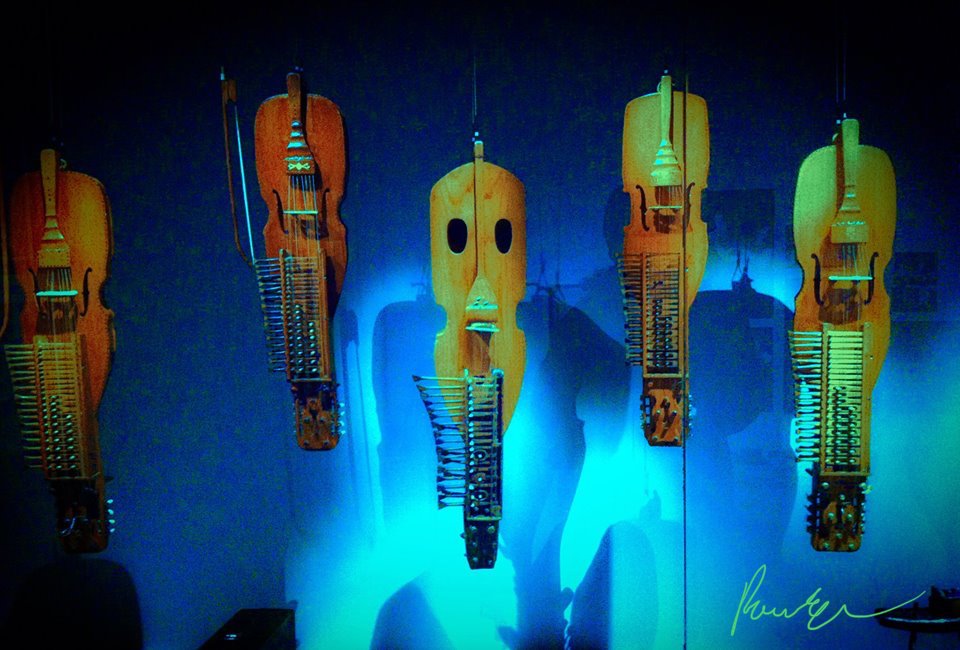
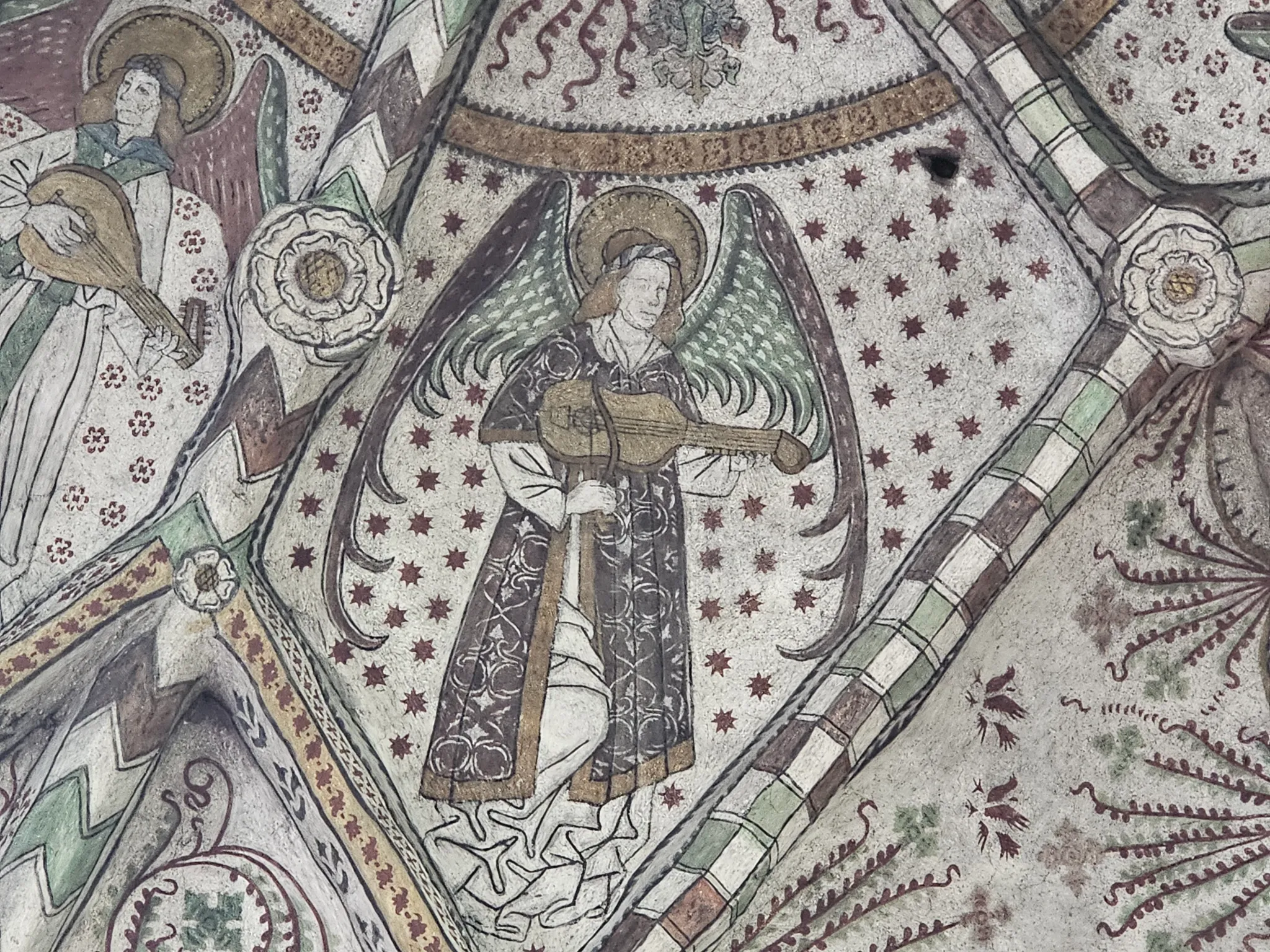
The keyed fiddle (nyckelharpa) is an instrument that is played with a bow and whose tones are determined by keys equipped with tangents that shorten the playing strings in order to produce the correct pitch. But in the designation nyckelharpa there also lies the appearance and the shape of the instrument body.
The long, narrow instrument and the neck with its head, which provides space for wooden tuning pegs and other mechanical tuners, are an important part of the image of a nyckelharpa. Modern nyckelharpas have received F-holes in the top instead of the ”ox eyes” (oxögon), round sound holes on either side of the tailpiece, which were common on our older nyckelharpas, the gammelharpor.
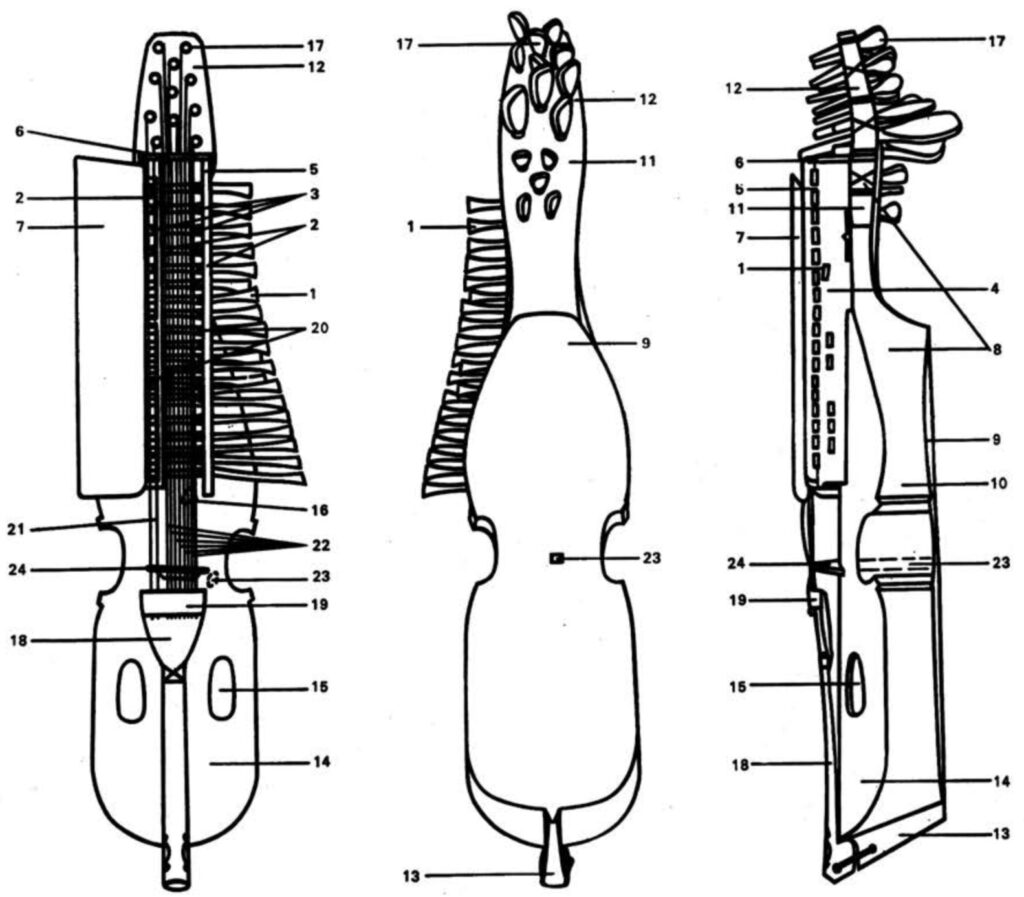
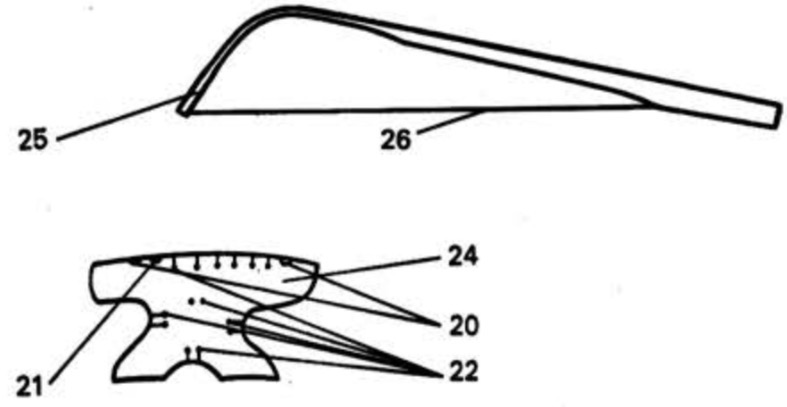
Keyed fiddle (contra-drone keyed fiddle) with bridge and bow. Names of parts.
- Key
- Keybox
- Tangent
- Key-box’s left panel
- Locking batten
- Key-box nut
- Key-box lid
- Body
- Back
- Wall (wib)
- Neck
- Pegboard
- Hookbar
- Belly
- Sound hole
- On upper bout
- Tuning peg
- Tailpiece
- Head of tailpiece
- Melody strings
- Drgone string
- Resonance string
- Sound post
- Bridge
- Bowstick
- Hairs
Keyed fiddles without resonance strings
Keyed fiddles without resonance strings are an early form of the instrument, appearing in depictions from the late 15th century up to around 1620. These instruments have a simpler design and produce a tune without the added resonance of sympathetic strings. They represent the earliest stage in the development of the nyckelharpa and provide important insight into the instrument’s historical construction and musical tradition.
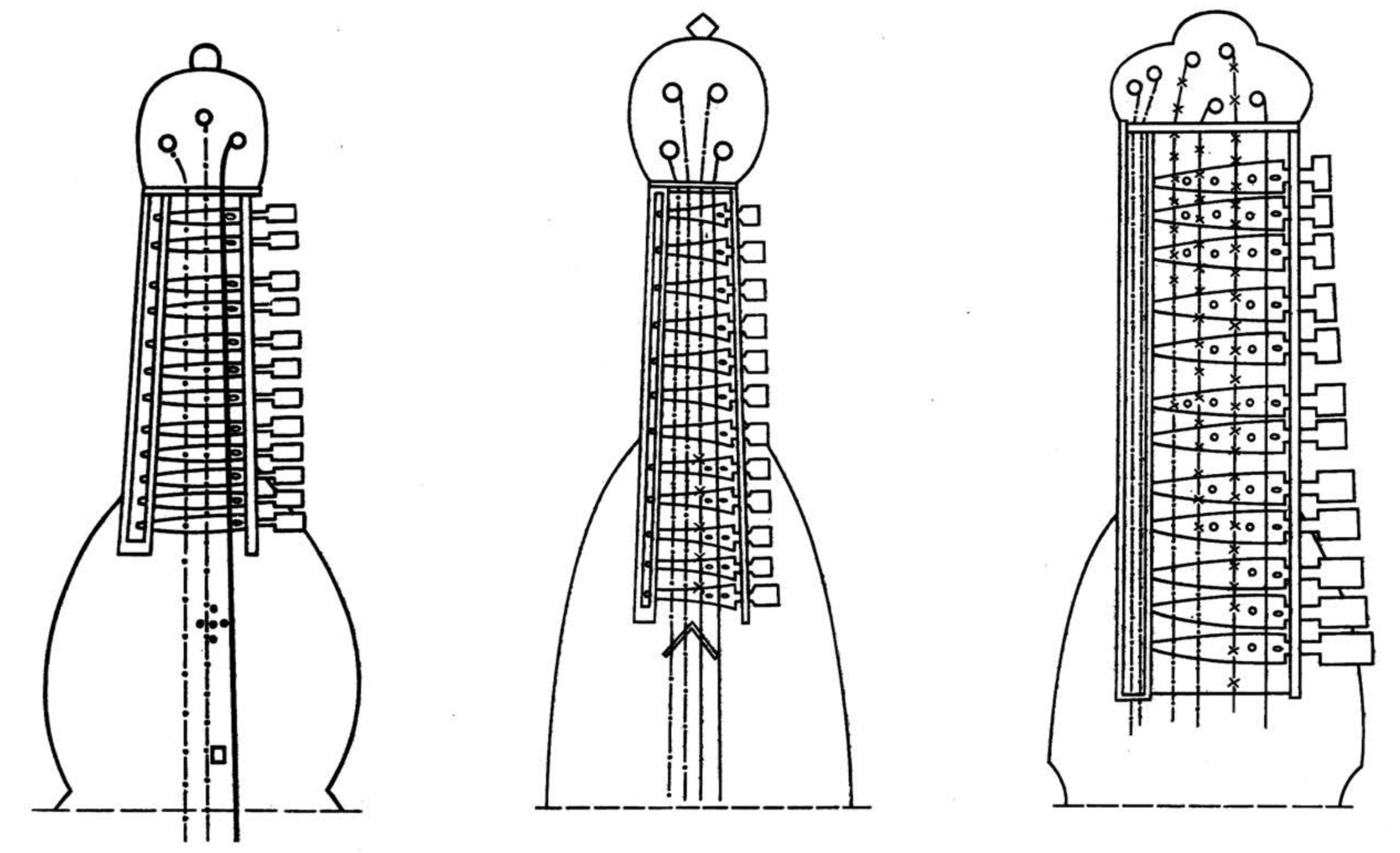
Moraharpa
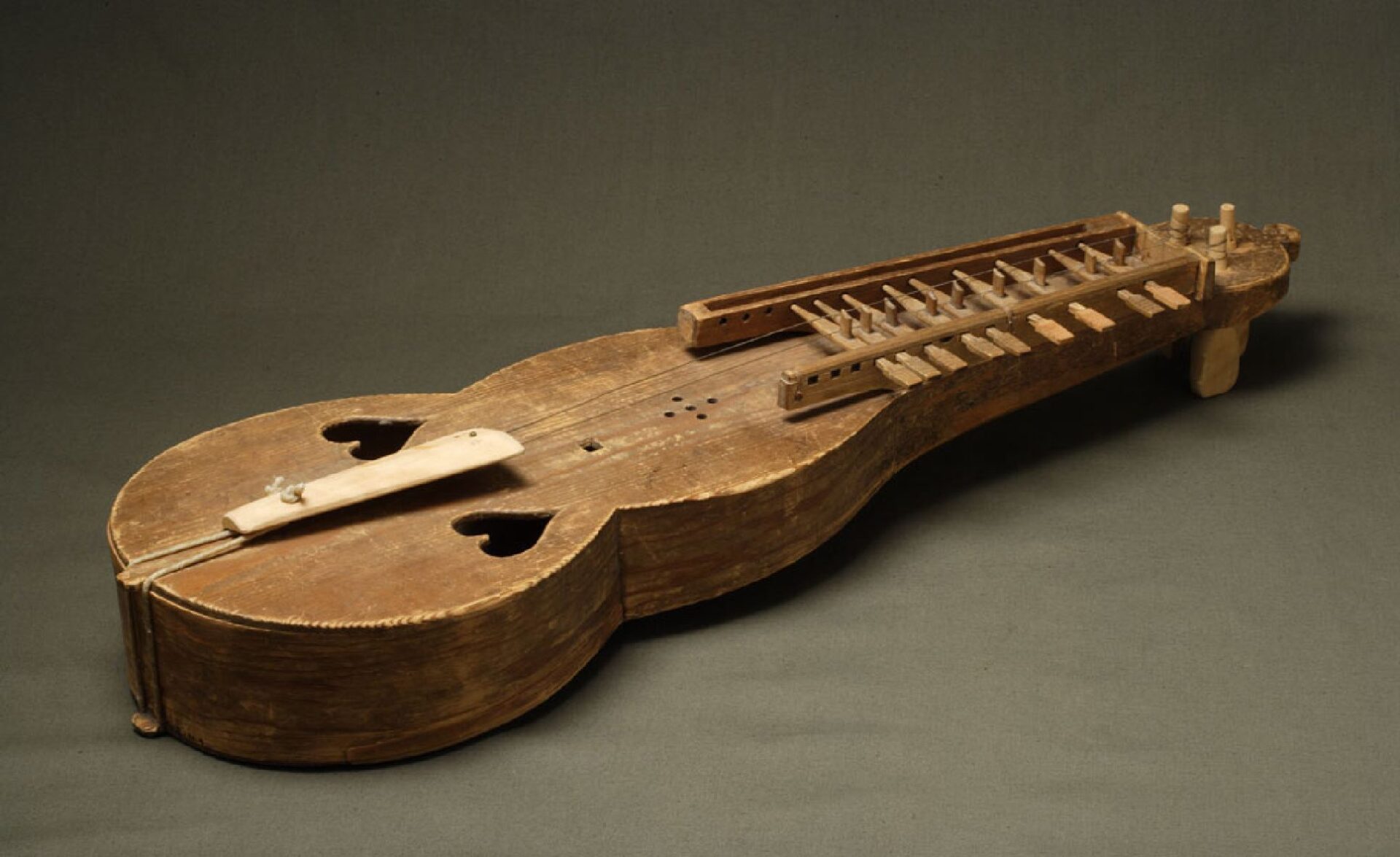
The Moraharpa from Dalarna is considered one of the oldest known keyed fiddles in Sweden. The oldest preserved instrument, located at the Zorn Museum in Mora, bears the year 1526 engraved on its back, a date confirmed by radiocarbon dating of the wood. It appears to be closely related to the Schlüsselfiedel depicted by Michael Praetorius in his Theatrum Instrumentorum from 1620. Other early nyckelharpas have also been discovered in Finland and Norway.
Esseharpa
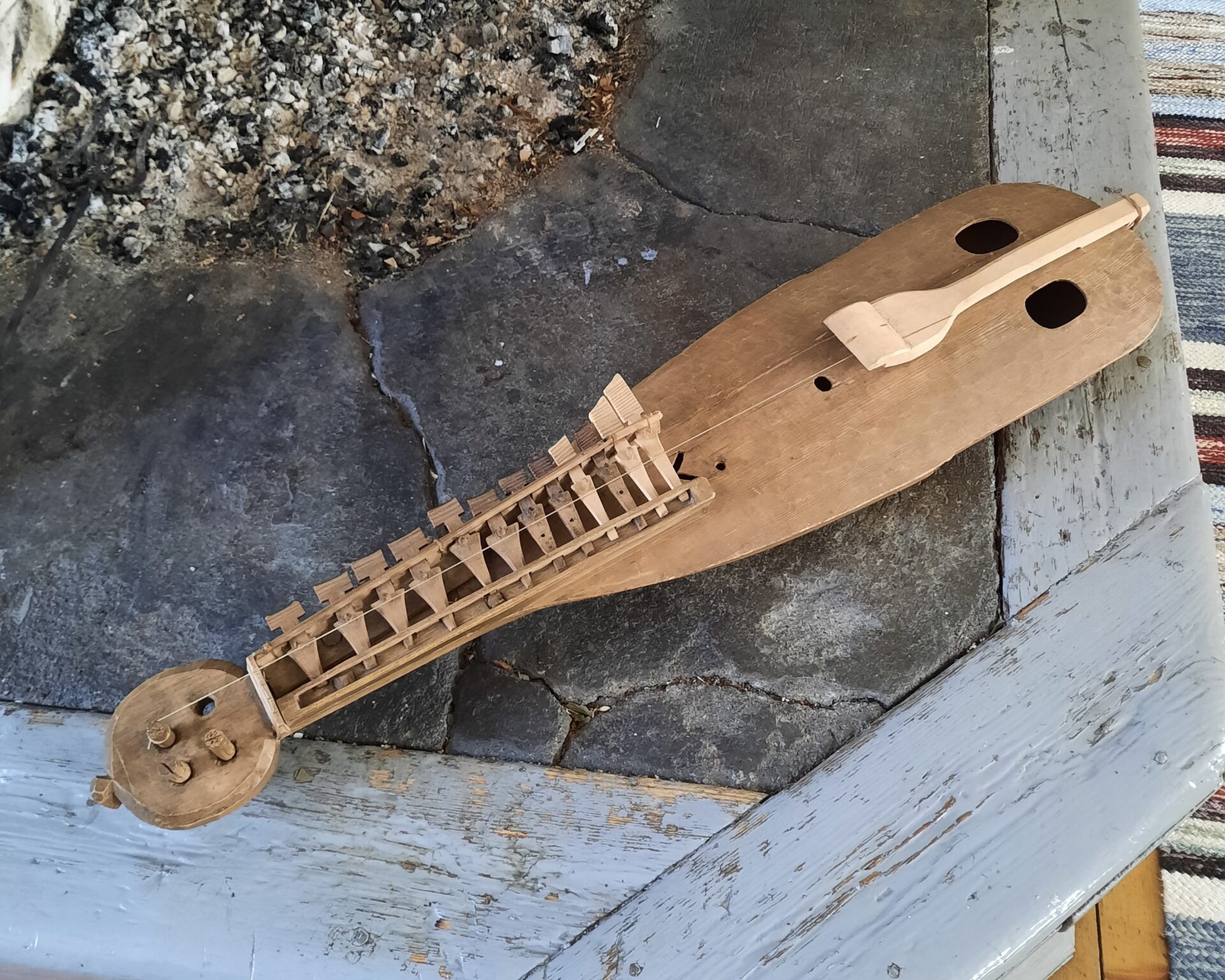
The keyed fiddle from Esse (Leonard Häll’s collection in Finland) do also has a row of keys, each with a single tangent, except for the uppermost keys, which have two tangents.
No information is available regarding the exact age of the instrument, but based on its construction it likely dates from before the 18th century. It measures 800 mm in length and is privately owned.
Vefsenharpa
The keyed fiddle in the N.M. collection no. 43367 from Vefsen, Norway, has a row of keys with two tangents each, and several keys feature additional metal tangents.
The Mora keyed fiddle has a melody string and two drone strings, while the Esse keyed fiddle has a melody string that partly serves as a drone and partly as a parallel-coupled string.
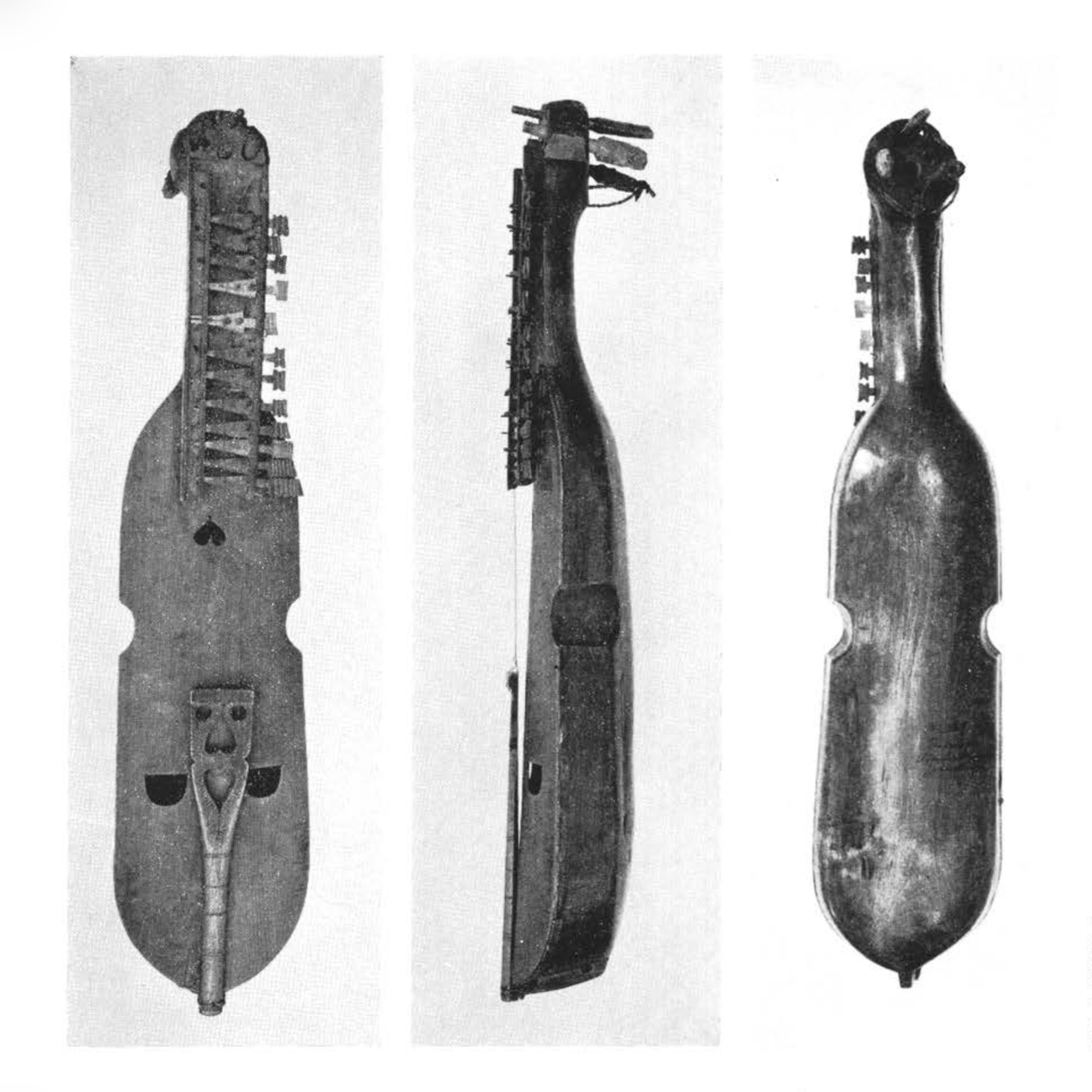
The Vefsen instrument features two parallel-coupled mixtur strings, two alternating mixtur and drone strings depending on the engaged knaver, and two drone strings. Based on radiocarbon dating of the wood and the ornamentation, it most likely dates from the late 1600s.
Keyed fiddles with resonance strings
Keyed fiddles with resonance strings represent a later stage in the development of the nyckelharpa. Unlike earlier models without resonance strings, these instruments produce a richer, more resonant sound, thanks to the additional strings that vibrate sympathetically with the melody strings. In the folk tradition, different types of keyed fiddles are often named according to their playing mechanisms, reflecting both regional styles and historical design.
Enkelharpan
This page is under construction…
Kontrabasharpa
This page is under construction…
Silverbasharpa
This page is under construction…
Kontrabasharpa med dubbellek
This page is under construction…
Kromatisk nyckelharpa
This page is under construction…
Get in touch
For bookings, collaborations, press inquiries, or general questions, please get in touch by using the form.
ABOUT RAUKTORI
With forbidden powers and a mind torn by its own madness, Rauktori combines the legacy of Christianity with the spirit of the Vikings. It is said that Rauktori left a mark upon the world through the Christian runestones that still stand across the North, bridging the old gods and the new faith. Like a grim reaper, Rauktori decides whether souls go to Satan or to the Gods.